
The motors are 24 percent more efficient than the ones you would find in an I-Pace, with 50 ms response times, far faster than a conventional powertrain. The motors use copper hairpins (144 per motor) with 0.008-inch (0.2 mm) laminations and a 0.03-inch (0.7 mm) air gap between the rotor and stator. Like many other high-end EVs, the drive units use silicon-carbide inverters that can respond in less than a millisecond.
Range Rover
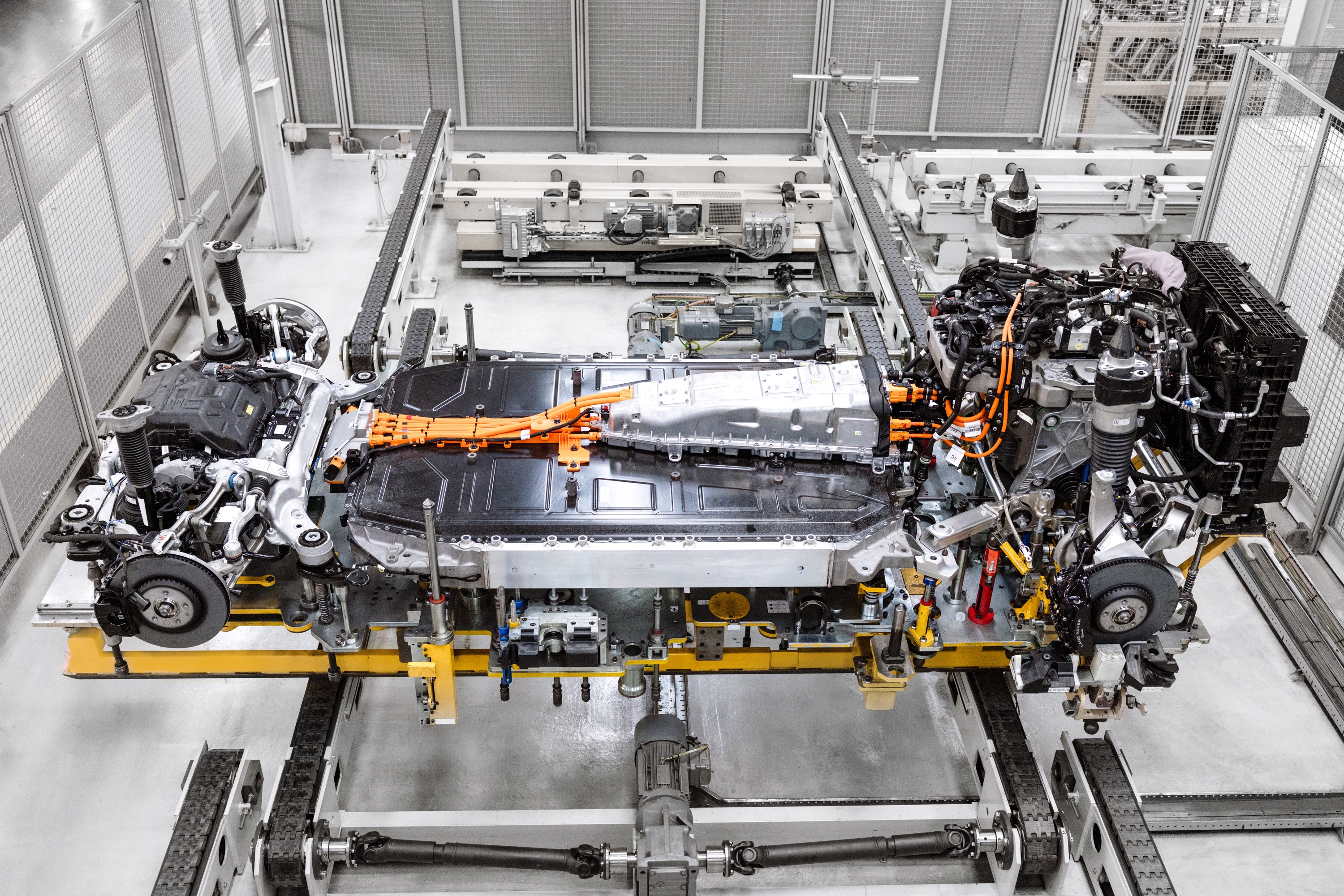
The battery pack and drive units mounted to the chassis.
Range Rover
Range Rover
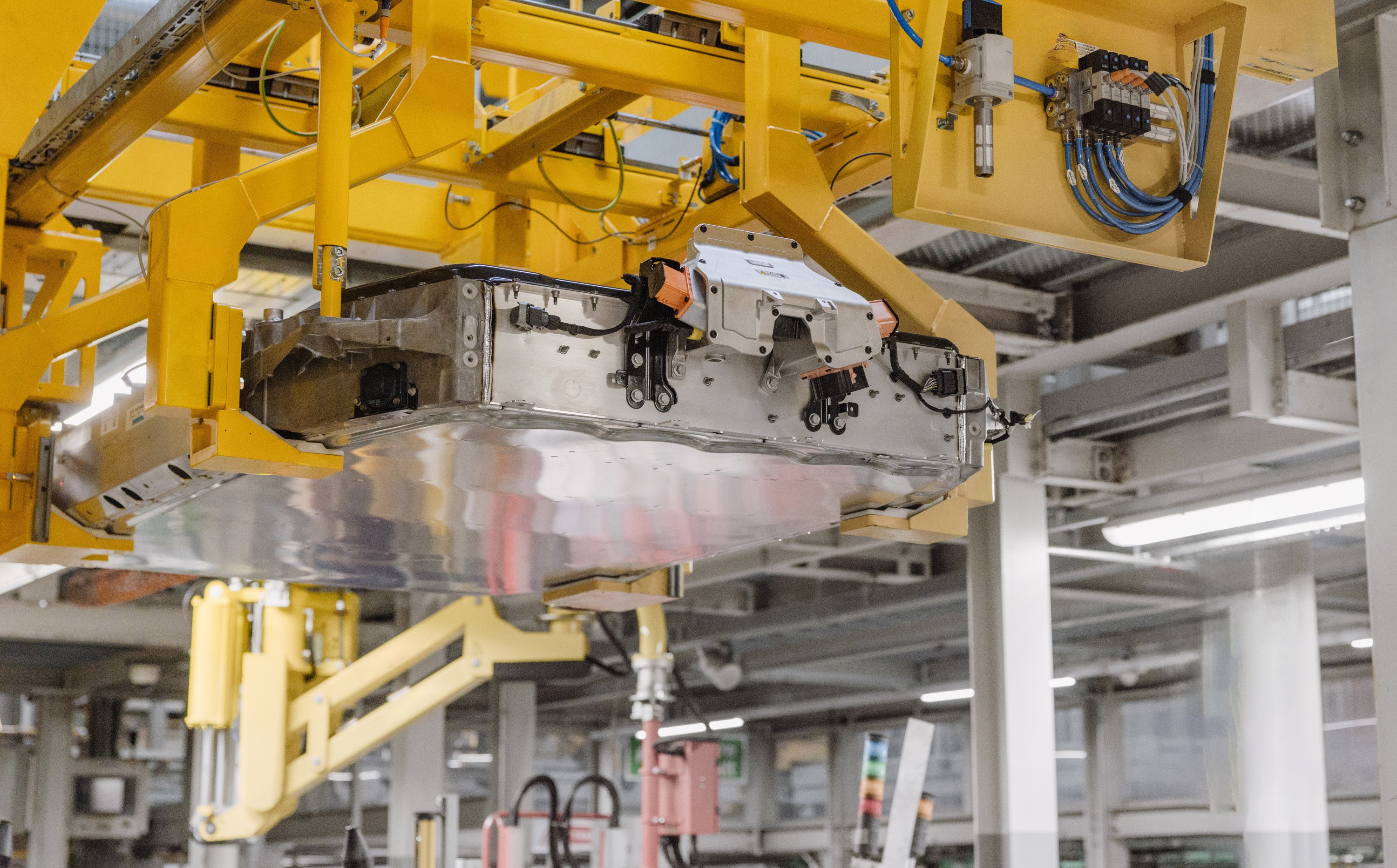
The battery pack has a smooth underfloor.
Range Rover
The battery pack and drive units mounted to the chassis.
Range Rover
The battery pack has a smooth underfloor.
Range Rover
In a nice bit of packaging, the power electronics are fitted to what would be the transmission tunnel in a conventionally powered Range Rover. The 118.5 kWh net battery is a double stack of cells, arranged in 10 modules. The cells use a nickel-manganese-cobalt chemistry from AESC, with aerogel spacers between the cells. The pack operates at 800 V, with two virtual twins that help the active battery management calculate performance. The powertrain also recaptures waste energy; the ThermAssist heat management system boosts range by 7 percent and reduces the amount of energy needed to heat the car by 40 percent.
On a full charge, the Range Rover Electric should be good for at least 333 miles (536 km) under the EPA test cycle, sufficient for 97 percent of owners’ daily needs. For US market cars, there is a native NACS port (with Supercharger access) and ISO15118 plug-and-charge support. DC fast charging tops out at 350 kW, which adds 125 miles (201 km) in 10 minutes, with a 10-80 percent time of 22 minutes. The Range Rover Electric is capable of providing up to 3.6 kW of AC power via its vehicle-to-load (V2L) functionality, with vehicle-to-grid (V2G) support planned for the future.
On and off-road
Thanks to the battery pack, the Range Rover Electric enjoys a center of gravity that’s 3.4 inches (85 mm) lower than the V8. It rides on standard air suspension with twin valve dampers, and the chassis is 56 percent stiffer thanks to the aluminum battery pack frame, which increases rigidity.
Range Rover
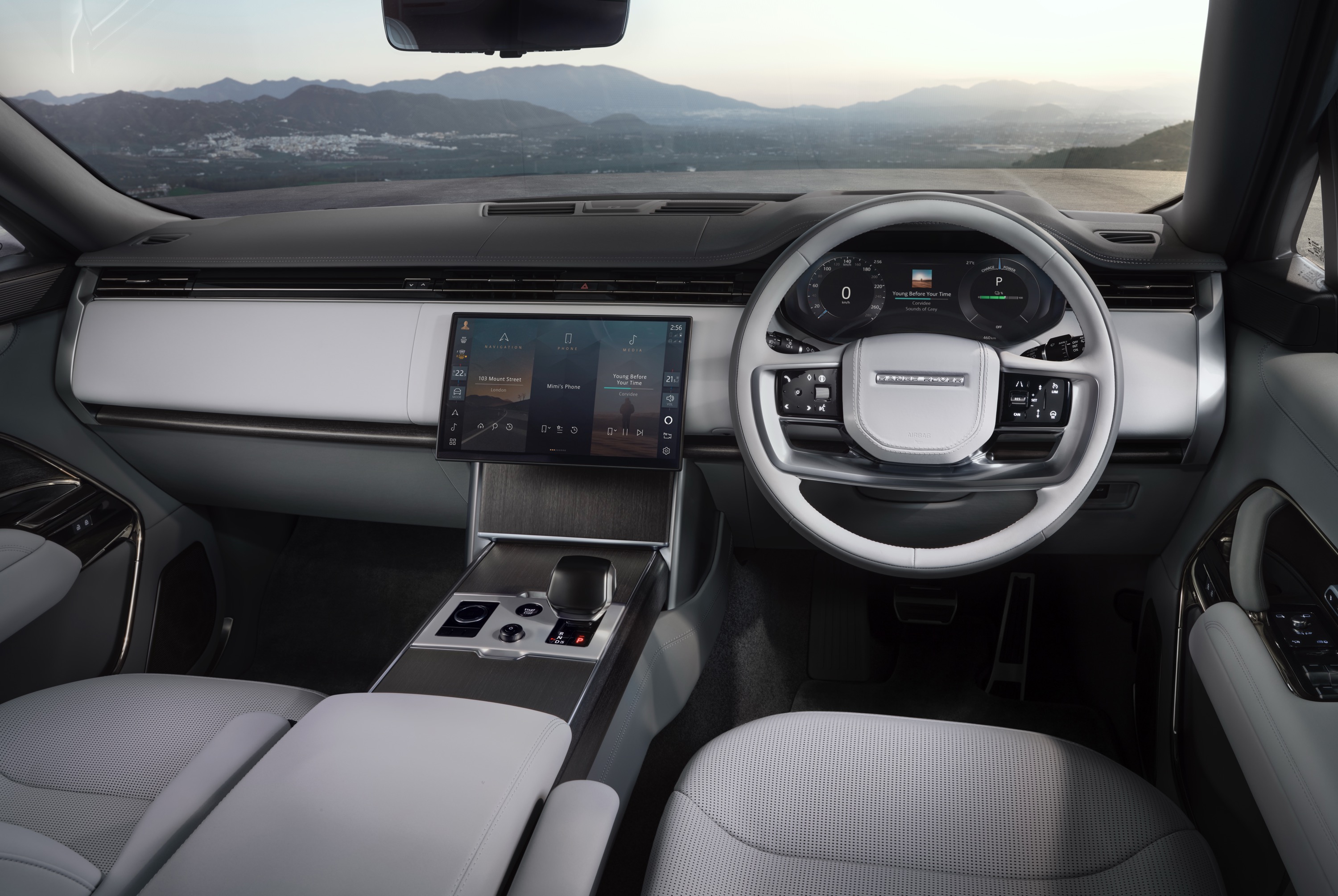
The interior is even more tranquil now that there’s no V8 to add NVH.
Range Rover
Range Rover
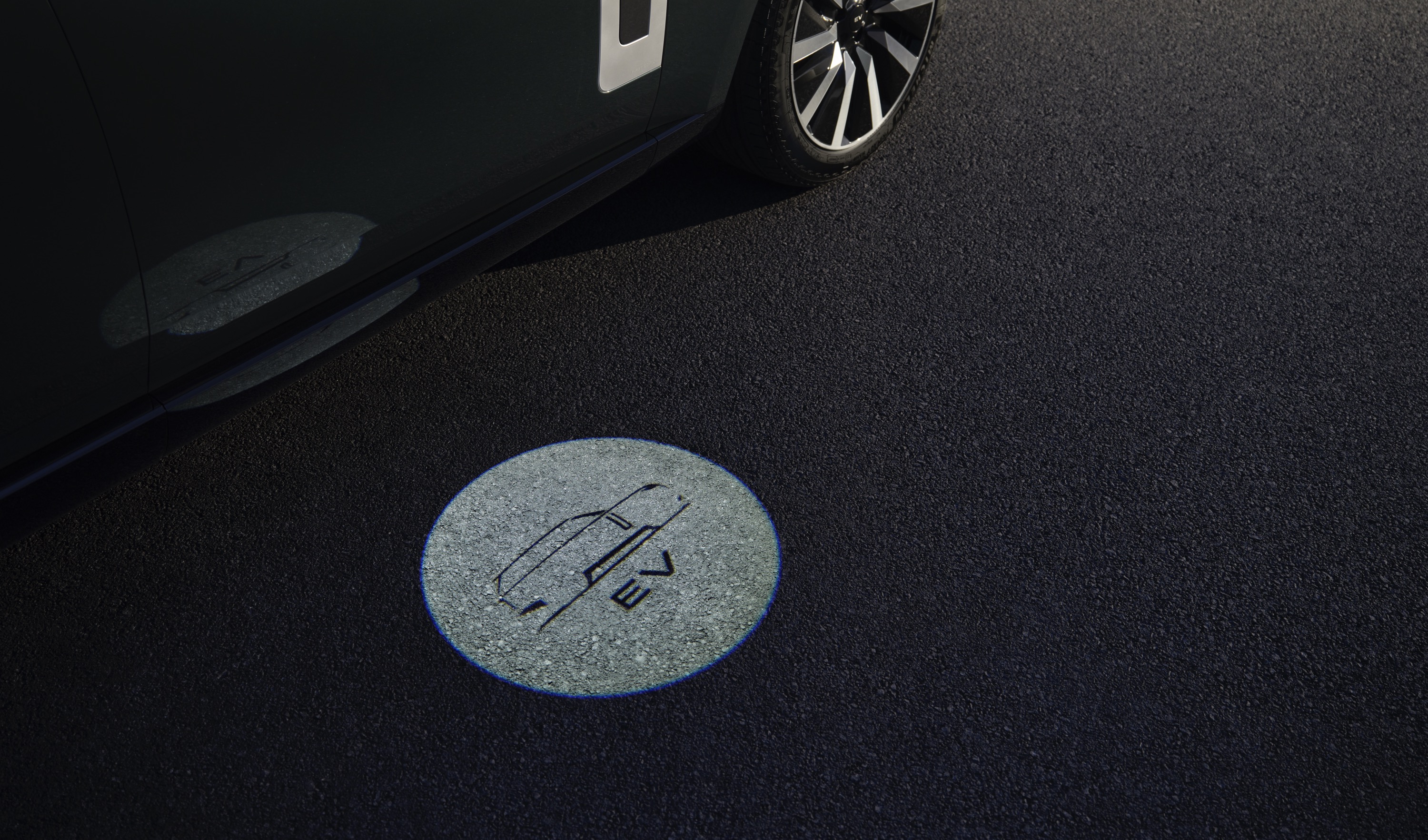
The puddle lights remind you it’s an EV in case you forgot.
Range Rover
The interior is even more tranquil now that there’s no V8 to add NVH.
Range Rover
The puddle lights remind you it’s an EV in case you forgot.
Range Rover
An inherent advantage of electric propulsion is the better noise, vibration, and harshness; the motors are smooth and quiet, and as a result, the Range Rover Electric is 7 decibels quieter than the V8. JLR told us it needed to add some extra isolation to the front drive unit and that it had to pay attention to the HV cables, which can conduct noise and vibration into the cabin. But there’s also an active noise cancellation system that uses the new, very thin membrane speakers that JLR developed together with Warwick Audio that are mounted in the seat headrests.